
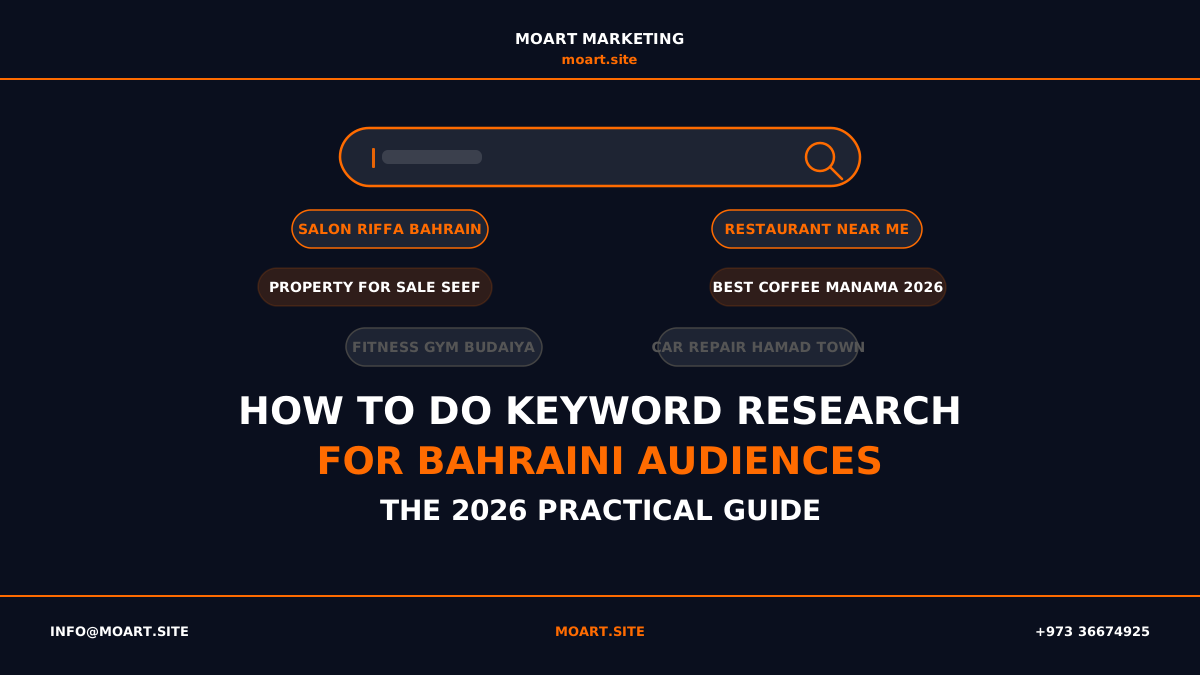
A gym owner in Budaiya spent three months writing blog posts targeting “fitness tips” and “workout routines.” Good content. Zero traffic.
Meanwhile a competitor two streets away wrote four pages targeting “ladies gym Budaiya,” “women’s fitness Bahrain,” and “gym near Budaiya mall” — and picked up a steady stream of new members from Google every single month.
The difference wasn’t the quality of the writing. It was the words they chose to target. One was writing for a global internet. The other was writing for the actual people in her neighbourhood searching on their phones.
That’s keyword research — and done right for a Bahraini audience, it’s one of the highest-leverage things a small business can do.
Key Takeaways
- Keyword research finds the exact phrases your Bahraini customers type into Google before they buy
- Global keywords with high search volume are almost never the right target for a small Bahrain business
- Local, specific, lower-volume keywords convert far better and are far easier to rank for in Bahrain
- Bahrain’s bilingual search behaviour means Arabic and English keywords need separate attention
- Free tools are enough to get started — you don’t need expensive software
What Keyword Research Actually Is — And What It Isn’t
Keyword research is the process of finding out which words and phrases real people type into Google when they’re looking for something — then using those words deliberately in your website content, page titles, and Google Business Profile.
It is not guessing what sounds professional. It is not using industry jargon. It is not writing content about topics you find interesting and hoping Google figures out the rest.
A property developer in Bahrain Bay might instinctively use language like “premium waterfront residences” on their website. But their actual customer is typing “apartments for sale Bahrain Bay” or “2 bedroom flat Bahrain Bay price” into Google. If those phrases aren’t on the developer’s website, Google has no reason to show it to that searcher.
Keyword research closes the gap between how a business talks about itself and how its customers actually search for it.
Why Keyword Research for Bahrain Is Different from Global SEO Advice
Most keyword research guides are written for large Western markets — the UK, the US, Australia. The advice there is built around high search volumes, fierce competition, and audiences searching almost exclusively in one language.
Bahrain is different in three important ways.
Lower search volume, but high intent — A keyword like “catering services Bahrain” might show only 90 monthly searches in a tool. In a global context that sounds tiny. In Bahrain, 90 people a month searching for exactly that, in a country of 1.5 million, is a genuinely valuable audience. And because volume is low, ranking for it is far more achievable than any global keyword.
Bilingual search behaviour — Bahraini users switch between Arabic and English constantly — sometimes within the same search session. A customer might search “salon riffa” in English and “صالون الرفاع” in Arabic on the same day. Both need to be covered. Most Bahraini businesses only optimise for one language and miss half their potential audience.
Hyper-local geography matters — People in Bahrain search by area specifically and frequently. “Near me” searches are high, but area-specific searches like “Muharraq,” “Hamad Town,” “Budaiya,” “Juffair,” and “Isa Town” appear constantly in local queries. A business that only targets “Bahrain” as a location modifier is missing the more specific — and more convertible — area-level searches.
According to Google Trends for MENA, location-specific and Arabic-language queries in Bahrain have grown steadily year on year, making bilingual local keyword targeting increasingly important for any business here.
Step 1 — Start With What Your Customers Actually Say
Before opening any tool, do this first.
Write down every question a customer has ever asked you before buying. Write down the words they used — not your words, theirs. Write down the complaints you hear about competitors. Write down what people search for on your Instagram explore or DMs.
A shawarma restaurant owner in Adliya might write down things like: “where can I get late night food in Adliya,” “best shawarma near me Bahrain,” “cheap eats Adliya,” “restaurants open after midnight Manama.”
Those phrases are raw keyword material. They’re real. They reflect actual search intent. No tool will give you better starting material than the conversations you’ve already had with your own customers.
Then group them into three types of intent:
Informational — the person is learning something (“what is the best area to buy property in Bahrain”)
Navigational — the person is looking for a specific place or business (“Layali restaurant Muharraq”)
Transactional — the person is ready to buy or visit (“book table restaurant Manama,” “best salon Riffa price”)
Transactional keywords are your priority. They bring the most immediately valuable traffic.
Step 2 — Use Free Tools to Expand and Validate Your List
Once you have a seed list from your own customer knowledge, these free tools help you expand it and understand which phrases are actually being searched.
Google Search itself — Type a phrase into Google and look at the autocomplete suggestions that appear. These are real searches that real people in Bahrain make. “Salon Bahrain” autocompletes to “salon Bahrain near me,” “salon Bahrain ladies,” “salon Bahrain Riffa,” “salon Bahrain price” — each one is a keyword worth considering. Scroll to the bottom of the results page for the “related searches” section — more gold.
Google Keyword Planner — Free with a Google account. Lets you enter seed keywords and see monthly search volumes, related terms, and competition levels. Filter by Bahrain as the location for relevant data. Volume numbers for Bahrain will look small compared to global figures — that is expected and normal, not a problem.
Google Search Console — If your website is already live, Search Console shows you exactly which queries people are already using to find your site. This is often the most useful data available because it’s your actual current audience, not a prediction.
AnswerThePublic — Enter a broad topic and it generates a visual map of questions people ask around that topic. Useful for finding informational keywords and FAQ content opportunities.
Google Trends — Filter to Bahrain to see which topics and queries are growing in local interest over time. Useful for spotting seasonal patterns — a flower shop in Juffair would find clear search spikes around Valentine’s Day, National Day, and Eid.
According to Google Search Central’s guidance on understanding users, aligning your content with the specific language your audience uses is one of the most fundamental and high-impact SEO actions a website can take.
Step 3 — Prioritise Local and Long-Tail Keywords
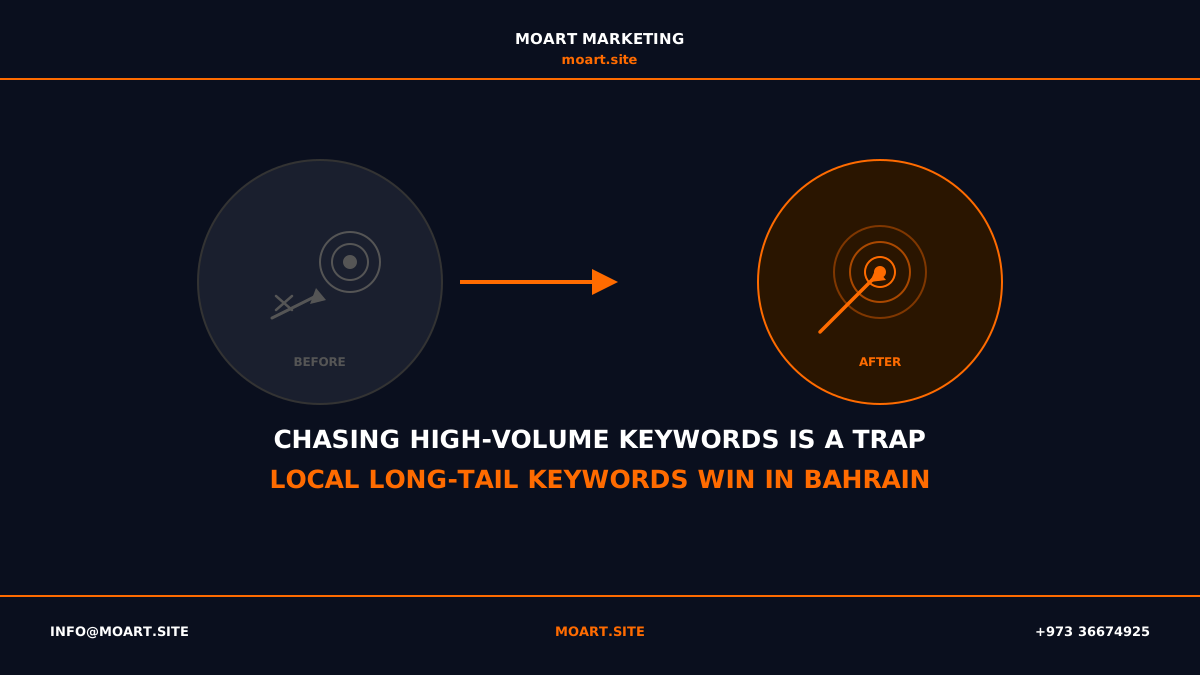
This is where Bahraini businesses consistently make the wrong call.
They look at keyword volumes, see that “restaurant Bahrain” has higher numbers than “family restaurant Hamad Town Friday brunch,” and chase the higher-volume term. Then they wonder why they never rank — because every established restaurant brand in Bahrain is targeting that same broad term with years of authority behind them.
The smarter play is long-tail keywords — longer, more specific phrases that reflect exactly what a particular type of customer is searching for at the moment they’re ready to act.
A homemade food business in Isa Town is never going to rank for “food delivery Bahrain.” But “homemade machboos delivery Isa Town” or “home cooked Bahraini food order online” — these are winnable. The person searching that phrase is more specific, more ready to buy, and facing far less competition in the search results.
The formula for effective Bahraini keyword targeting looks like this:
Service or product + area or “Bahrain” + qualifier
Examples: “ladies hair salon Riffa cheap,” “villa for rent Saar Bahrain 3 bedroom,” “wedding cake delivery Manama,” “24 hour pharmacy Muharraq.”
These convert. And in Bahrain’s market, they rank.
The team at Moart has done keyword research specifically for Bahraini businesses across industries — restaurants, real estate, retail, clinics, and more. What they consistently find is that the most valuable keywords are the ones businesses assume are too small to matter. If you want to know which phrases your actual customers are using to find businesses like yours, WhatsApp +973 36674925 and let’s look at it together.
Step 4 — Don’t Ignore Arabic Keywords
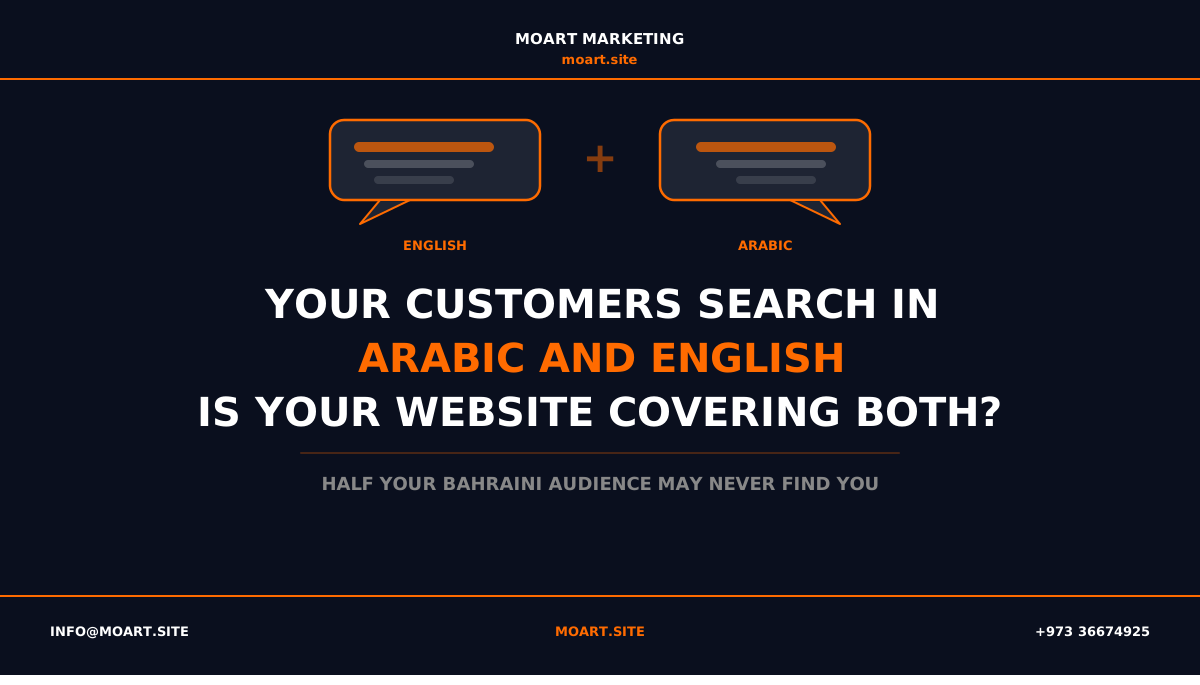
This step gets skipped by the majority of Bahraini businesses — and it’s a significant missed opportunity.
A large portion of Bahrain’s population searches primarily in Arabic. Gulf Arabic search behaviour differs from Modern Standard Arabic too — people search the way they speak, not the way formal Arabic is written. That means a keyword research process for Bahrain needs to include colloquial Gulf Arabic terms alongside formal Arabic and English.
Practical ways to find Arabic keywords for Bahrain:
Type your service into Google in Arabic and check the autocomplete. Ask your Arabic-speaking customers how they would describe what you do in a search. Use Google Keyword Planner with Arabic-language seed terms filtered to Bahrain.
For bilingual businesses, having key pages on the website in both Arabic and English — each using the right keywords for that language — can effectively double the search surface area without doubling the content work.
Step 5 — Map Keywords to the Right Pages
Finding keywords is only half the work. The other half is knowing where to use them.
Each page on your website should target a specific keyword or small cluster of related keywords. One page, one clear focus. A page trying to rank for everything ranks for nothing.
A salon in Manama might structure it like this:
Homepage targets the broadest brand search — “beauty salon Manama Bahrain.” A dedicated services page targets “hair colour Manama salon.” A separate page targets “bridal makeup Bahrain.” A location page targets “ladies salon near Seef Mall Bahrain.”
Each page gives Google a clear, unambiguous signal about what that specific page is about and who it’s for. That clarity is what gets pages ranked.
The keyword goes in the page title, the main heading, naturally within the first paragraph, in the image alt text, and in the meta description. Naturally — not stuffed. If it reads awkwardly, you’ve overdone it.
Frequently Asked Questions
What free tools work best for keyword research in Bahrain? Google’s own tools are the most reliable starting point — Google Search autocomplete, Google Keyword Planner filtered to Bahrain, and Google Search Console if your site is live. For question-based keywords, AnswerThePublic gives a useful picture of what people ask around a topic. Google Trends filtered to Bahrain shows seasonal patterns. These free tools together cover everything a small Bahraini business needs to build a solid keyword list without spending anything.
Should I target Arabic or English keywords for my Bahrain business? Both, wherever possible. Bahrain’s audience searches in both languages — often the same person uses both depending on what they’re searching for and when. English tends to dominate searches for professional services, real estate, and hospitality. Arabic is strong for everyday local services, food, and retail. A bilingual keyword strategy that covers key terms in both languages reaches significantly more of your actual local audience than a single-language approach.
How many keywords should a small Bahraini business focus on? Start with ten to fifteen well-chosen local keywords rather than a list of two hundred generic ones. For a small business, five to eight high-intent local keywords targeted across your core website pages — homepage, services pages, location pages — will move the needle far more than a broad unfocused list. Add to the list gradually as you create new content and as Search Console shows you what’s already bringing traffic to your site.
Keyword research for Bahrain doesn’t require expensive tools or a marketing degree. It requires understanding that your customers are typing specific, local, often bilingual phrases into Google — and that the gap between those phrases and what’s currently on your website is exactly where your next customer is being lost.
Bahraini businesses that get keyword research right stop guessing and start showing up for searches that actually convert. Moart builds keyword strategies specifically for Bahrain’s market — bilingual, hyper-local, and matched to how real customers here actually search. Get in touch and let’s find the phrases your business should be owning. WhatsApp: +973 36674925 | moart.site | info@moart.site